SOLD
Out of stock

Item:
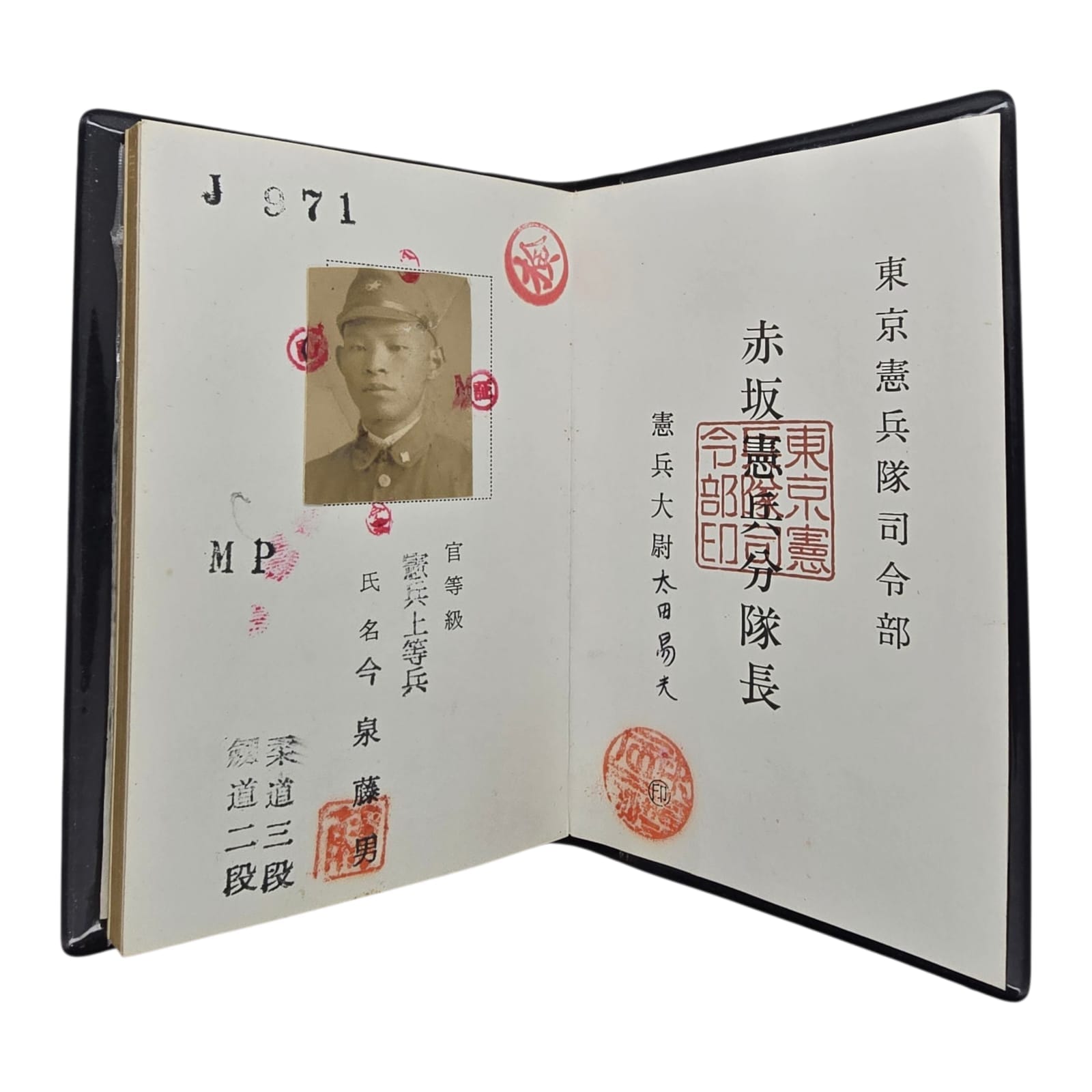
This booklet belonged to a Japanese soldier who served in the Imperial Japanese Gendarmerie (Kenpeitai) during the period around the Second World War. Across several pages he is listed with the rank Jōtōhei (上等兵), equivalent to Lance Corporal.
The booklet shows that he was registered with the Tokyo Gendarmerie, specifically connected to the Akasaka Gendarmerie unit. The various photographs, registration dates, and red official seals indicate that he was regularly inspected, officially authorized, and actively serving around Shōwa 18 (1943).
The document served as his military identification booklet, complete with photographs, rank information, officer stamps, and administrative approvals. It clearly shows that he actively participated in military police duties within the Japanese armed forces.
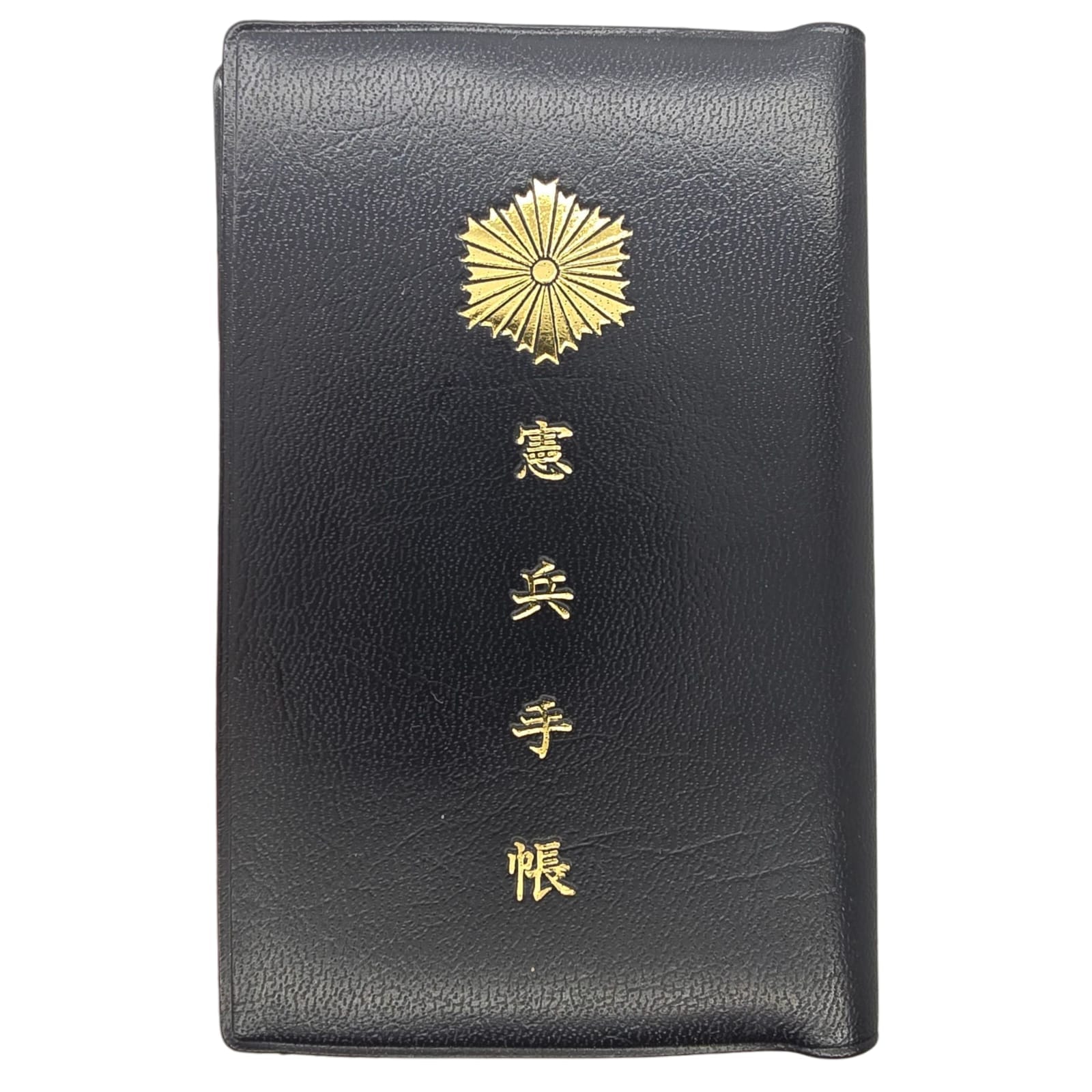
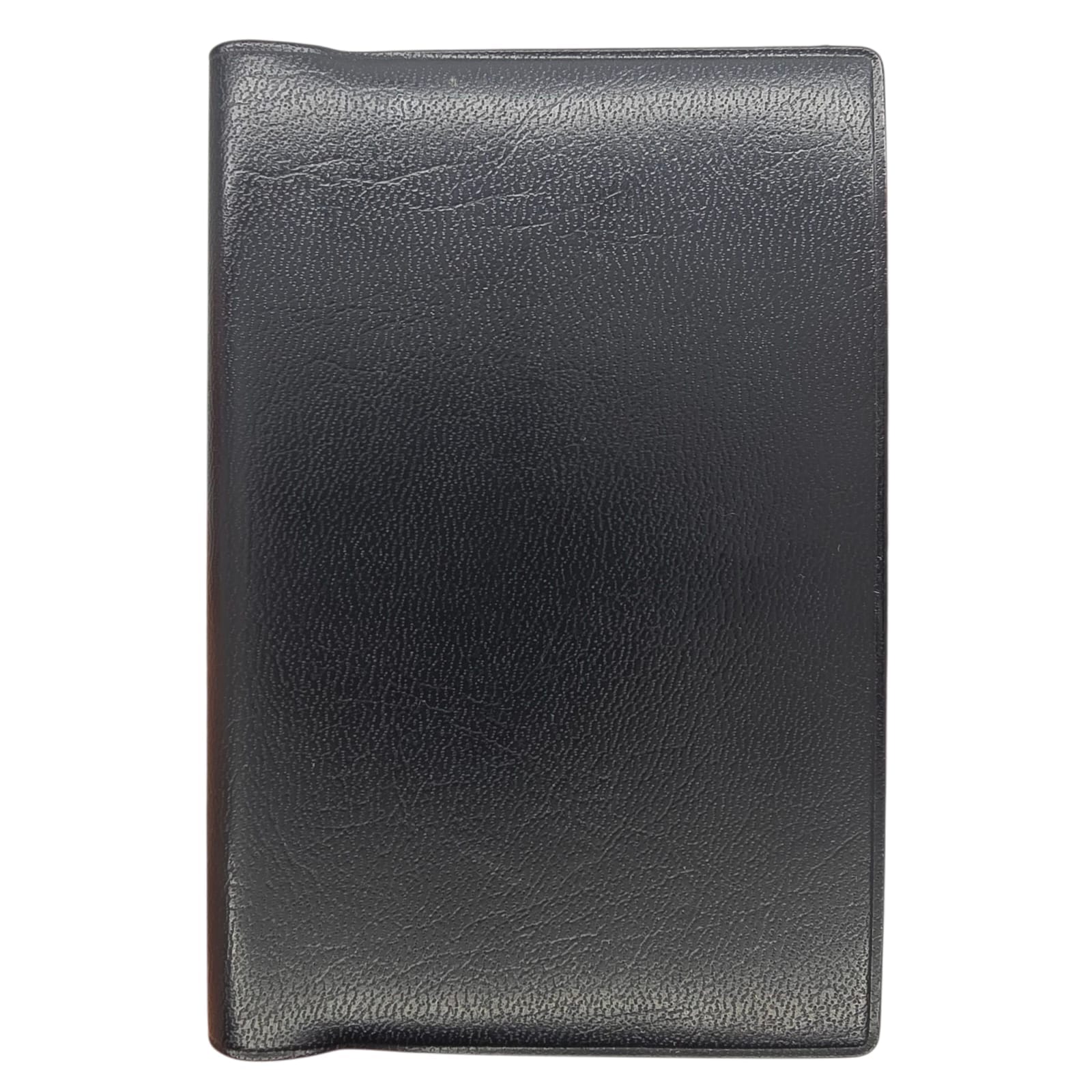
憲兵手帳
→ Kenpei Techō
→ Literally: “Military Police Booklet” or “Gendarmerie Handbook”
The golden chrysanthemum on the front is the Imperial Seal of Japan, indicating that the booklet was officially issued by the Japanese government or a military authority.
Conclusion:
This is the official identity and service booklet of a soldier who served in the Imperial Japanese Gendarmerie (憲兵隊 – Kenpeitai), the military police force of wartime Japan.
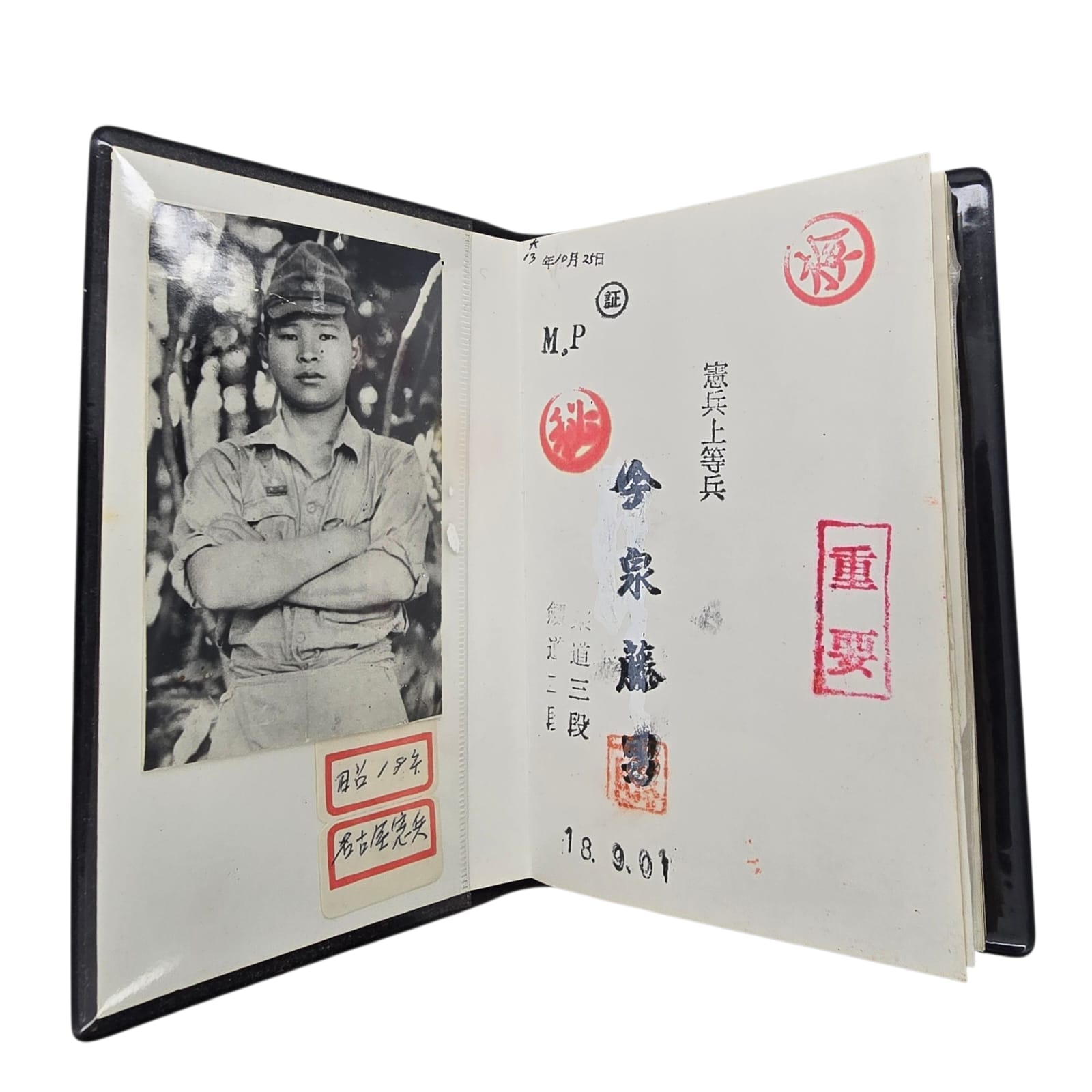
Photograph + Personal Details
On the left-hand pages you always find:
An official photograph
His rank
His name
Various authority seals
In this booklet, across multiple photos, it states:
上等兵 (Jōtōhei)
→ Lance Corporal
Name appearing repeatedly:
今泉藤男 (Imaizumi Fujio)
This is the name exactly as written inside the document.
The booklet contains many red and black seals:
Red seals = official approval
Black seals = verification / authorization
Examples:
認 → “Approved / Authorized”
重要 → “Important” (page requires official verification)
MP → Military Police (Japan used this English abbreviation as well)
東京憲兵隊司令部
→ Headquarters of the Tokyo Gendarmerie
赤坂憲兵分隊長
→ Commander of the Akasaka Gendarmerie Sub-unit
(Akasaka is a district of Tokyo)
This indicates:
The soldier served under the Akasaka Gendarmerie unit
The page was approved/stamped by that unit’s commanding officer
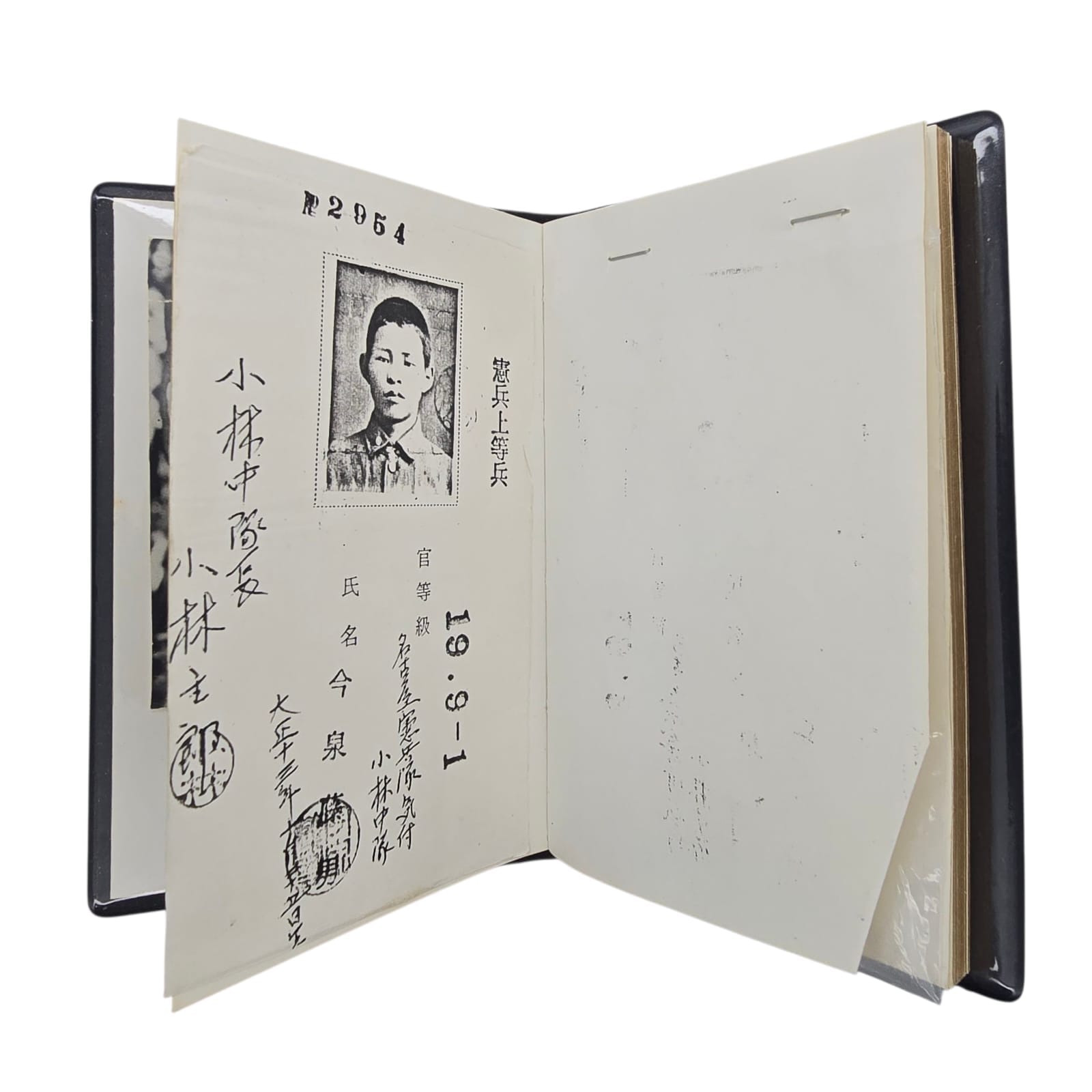
Here we see:
Another photo
Rank: 上等兵 (Jōtōhei – Lance Corporal)
Name: 今泉藤男
Date: 18.9.1
Shōwa 18 = 1943
9 = September
1 = 1st day
This registers a renewed identification in 1943.
Again:
Rank: 上等兵
Name
Multiple official approval seals
A date around Shōwa 18 (~1943)
The fact that he is shown in field uniform suggests:
→ He was actively serving in operational conditions, not only performing ceremonial police duties.
The “重要” (Important) seal indicates this was an official status update.
The booklet served as:
Identification document
The photos and seals confirm his identity.
Proof of rank and assignment
He consistently appears as Jōtōhei (Lance Corporal).
Gendarmerie registration book
It includes verification of:
presence
duty eligibility
unit assignment
performance within the military police
Authorization pass
The numerous seals show he was permitted to enter controlled or military zones.
This is an Imperial Japanese Military Police ID Booklet (Kenpei Techō) from the wartime era. It belonged to a soldier with the rank Lance Corporal (上等兵), listed as 今泉藤男 (Imaizumi Fujio) inside the document.
He served under the:
Tokyo Gendarmerie (東京憲兵隊)
specifically the Akasaka Gendarmerie Sub-unit (赤坂憲兵分隊)
The photographs and dates (around 1943) show that he was repeatedly inspected, registered, and authorized for active duties within the military police.
The booklet functioned as:
identification
rank and unit record
authorization document
administrative logbook for the Kenpeitai
This type of booklet is relatively rare, especially with multiple preserved photographs and clear official seals.
This Kenpeitai booklet is hard to find, and this example is in very good condition.

Item: Het boekje behoort toe aan een Japanse militair die diende binnen de Keizerlijke Japanse Gendarmerie (Kenpeitai) tijdens de periode rond de Tweede Wereldoorlog. De soldaat heeft op meerdere pagina’s de rang Jōtōhei (上等兵), wat overeenkomt met Lance Corporal / Geforderd soldaat.
Uit het boekje blijkt dat hij geregistreerd stond bij de Tokyo Gendarmerie, specifiek gelinkt aan de Akasaka Gendarmerie-eenheid. De verschillende foto’s, registratiedata en rode stempels tonen dat hij regelmatig werd gecontroleerd, officieel geautoriseerd en actief in dienst was rond Showa 18 (1943).
Het document fungeerde als zijn militaire identiteitsbewijs, compleet met foto’s, rangvermelding, stempels van officieren en administratieve verificaties. Het toont dat hij actief deelnam aan militaire politiediensten binnen het Japanse leger.
Op de omslag staat:
憲兵手帳
→ Kenpei Techō
→ Letterlijk: “Militaire Politie Boekje” of “Gendarmerie Handbook”
De gouden chrysant op de cover is het symbool van de Keizer van Japan. Dit betekent dat het boekje officieel is uitgegeven door de Japanse staat of een militaire autoriteit.
Conclusie:
Dit is het officiële identiteits- en dienstboekje van een soldaat die diende bij de Keizerlijke Japanse Gendarmerie (憲兵隊 – Kenpeitai), de militaire politie van Japan tijdens oorlogstijd.
Wat staat er op de eerste geopende pagina’s?
Foto + persoonlijke gegevens
Aan de linkerkant staat altijd:
In dit boekje staat bij meerdere foto’s:
上等兵 (Jōtōhei)
→ Geforderd soldaat / Lance Corporal
Naam (verschijnt meerdere keren in varianten):
今泉藤男 (Imaizumi Fujio)
Dit is gewoon de naam zoals hij in het document zelf staat.
Stempels op de pagina
Dit boekje zit vol rode stempels.
De Japanse militaire politie gebruikte:
Voorbeelden in het boek:
✔ "認"
→ Betekent “goedgekeurd”, “geautoriseerd”.
✔ "重要"
→ Betekent “belangrijk”, een aanduiding dat deze pagina officieel gecontroleerd moet worden.
✔ “MP” (Engelse letters)
→ Militair Politie (Japan gebruikte dit ook in lexicon voor Westerse herkenbaarheid)
Tekst op de rechterpagina (eerste set foto’s)
Hier staat:
東京憲兵隊司令部
→ Hoofdkwartier van de Tokyo Gendarmerie
Daarnaast staat een titel:
赤坂憲兵分隊長
→ Commandant van de Akasaka Gendarmerie Sub-eenheid
(Akasaka = wijk in Tokyo)
Dit betekent:
De soldaat diende onder de Akasaka-eenheid van de Tokyo Militaire Politie
De pagina is ondertekend / afgestempeld door de commandant van die eenheid
Tweede pagina met foto (nr. 2964)
Ook hier zien we:
Deze pagina registreert een vernieuwde identificatie in 1943.
Derde foto (soldaat in veldtenue, armen gekruist)
Ook hier weer:
De foto in velduniform suggereert dat:
➡ Hij actief in dienst was in een operationele omgeving, niet alleen ceremoniële politie.
De stempel ”重要” (belangrijk) benadrukt dat dit een officiële update van zijn status is.
Waarvoor werd dit boekje gebruikt?
Het boekje functioneerde als:
✔ Identiteitsbewijs
De foto’s en stempels bevestigen wie hij is.
✔ Bewijs van rang en functie
Hij verschijnt telkens als 上等兵 – Jōtōhei.
✔ Registratieboek van de Kenpeitai
Bevat verificaties van:
✔ Toegangspas / autorisatie
De vele stempels tonen dat hij bevoegd was binnen militaire zones.
Uitgebreide Samenvatting
Dit boekje is een Keizerlijk Japans Militaire Politie ID-boekje (Kenpei Techō). Het behoorde toe aan een soldaat met de rang Lance Corporal (上等兵), genaamd 今泉藤男 (Imaizumi Fujio).
Hij diende onder de:
Tokyo Gendarmerie (東京憲兵隊)
en was gelinkt aan de subeenheid:
Akasaka Gendarmerie-unit (赤坂憲兵分隊).
De verschillende foto’s en datums (rond 1943) tonen dat hij meerdere malen officieel werd geïnspecteerd, geregistreerd en geautoriseerd voor zijn rol binnen de militaire politie.
Het boekje diende als:
Dit type boekje is zeldzaam, vooral met meerdere foto’s en duidelijke stempels behouden.
Conditie: deze Kenpeitai boekjes zijn moeilijker te vinden en in mooie conditie